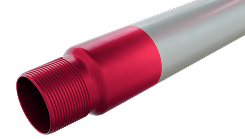
Build More Flexibility into Every Completion
The Innovus™ frac sleeve is the market-leading sliding sleeve system with more than 500,000 stages completed worldwide. Its multicycle technology provides operational flexibility for selective access or isolation at every sleeve.
Whether targeting ultra-tight formations, higher sand concentrations, or long-term reservoir management, the Innovus system delivers greater control, lower risk, and more efficient stimulation across the life of the well.

MAXIMIZE PRODUCTION
Enable deeper reach and higher stage counts

SCREENOUT RECOVERY
Close and isolate any stage immediately after a frac

LIFE OF WELL OPTIMIZATION
Convert from a producer to an injector to enhance recovery

Innovus SD
Versatile Performance
Standard duty, multicycle frac sleeve for low-to-moderate frac erosion applications
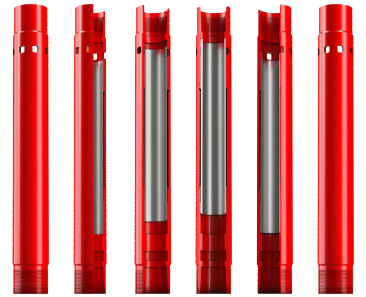
Innovus HD
Erosion Resistance
Heavy duty, multicycle frac sleeve for high frac erosion applications
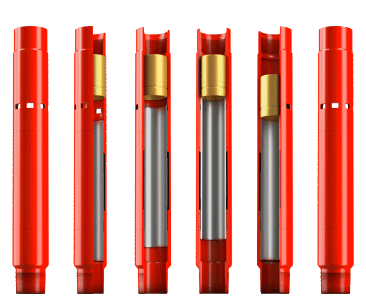
Innovus SD Convertible
Enhanced Recovery
Standard duty, multicycle frac sleeve for moderate frac erosion applications and future injection conformance management



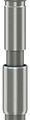


Innovus Frac Isolation Assembly
Ready. Set. Frac.
The Innovus frac isolation assembly (FIA) is deployed on coiled tubing or jointed pipe to locate and operate Innovus frac sleeves.
Erosion Resistance
Advanced Material
The Innovus FIA is engineered to withstand the harshest downhole environments, delivering exceptional erosion resistance at high rates, high tonnage, and unlimited stage counts.
High-Performance Element
The Bullet Element
Engineered to provide reliable resettable pressure isolation for single-point fracturing, this core technology continues to push the boundaries of what's possible in deeper, hotter, higher-pressure applications year after year.
Seamless Shift-Frac-Close
Bi-Directional
A simple, reliable mechanism with no pump activation required. Designed to grip the sliding sleeve during shift operations and hold the FIA securely in place throughout fracturing operations.
Screenouts
Debris-Tolerant Design
Designed to maintain functionality in the presence of frac sand, allowing residual proppant to be cleared from the FIA following a screenout.
Ultra-Reliable Locate Performance
Amplified Mechanical Debris
A purely mechanical, debris-tolerant design that eliminates the risks and limitations of pump-activated locating systems.
Fracturing
of Sequence
Pressure
Management
Fracturing
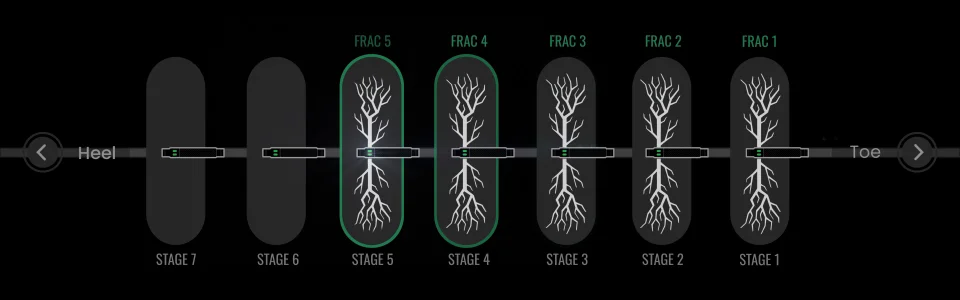
Sequential fracturing stimulates stages from toe-to-heel. It's simple, predictable, and highly effective. However, in geologically complex formations or in situations with multiple wells, rigid sequencing can limit the ability to optimize fracture placement or respond to downhole pressures or stress interactions.
 The conventional approach to multistage stimulation Proven to be effective in uniform environments Simplifies logistics and operational planning
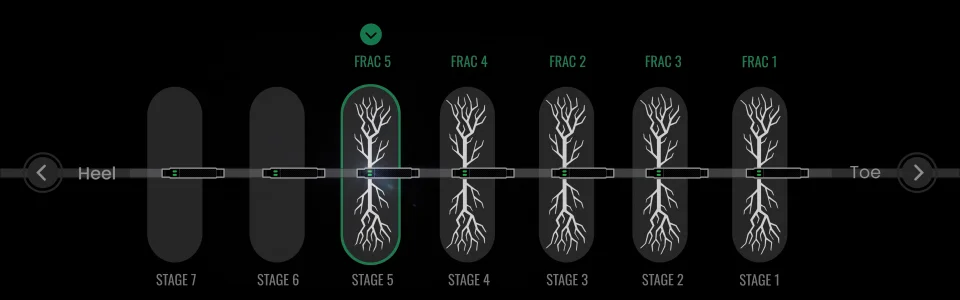
Out-of-sequence fracturing reorders stimulation stages along the wellbore. Selected stages are fractured out of order to respond to operational conditions, stress interactions, or reservoir behavior. This approach enables adaptive execution while maintaining pressure isolation between stages. Prior to Innovus sliding sleeve systems, there was no economical or reliable option to perform out-of-sequence-fracturing.
Adaptive stage sequencing based on reservoir response Improves fracture placement and stress management Maintains zonal isolation with repeated stage accessOut-of-sequence fracturing enables operators to manage stages with elevated breakdown pressures without abandoning the interval. By maintaining full drift and zonal isolation, operators can reattempt previously denied stages, balance stress profiles, and improve overall completion success.
Prevents abandonment of high-pressure or challenging stages Enables re-entry while maintaining isolation and full drift Increases percentage of stages successfully completedOut-of-sequence fracturing helps operators avoid seismic risk with controlled fracture initiation and uniform growth to distribute stress more gradually. If seismic monitoring indicates elevated risk, operators can suspend pumping, circulate out proppant, reclose the stage, and reposition uphole before resuming operations. This controlled approach allows stimulation to continue while actively managing seismic risk. The operator can then return to the previously skipped stages once pressure and seismic risk have been diffused.
Controlled fracture growth to reduce seismic potential Immediate suspension and isolation during monitored events Reposition the sequence to allow seismic activity to settle downZipper fracturing alternates stimulation across multiple wells on a pad by alternating operations between them. While one well is being fractured, the adjacent well is prepared for its next stage, reducing idle time and improving overall efficiency. This alternating sequence continues toe-to-heel, optimizing equipment utilization while maintaining stage isolation and operational continuity.
Reduces nonproductive time in single-coil operations Improves equipment utilization and pad-level efficiency Allows pressure and stress relaxation between stagesResult
By selectively stimulating stages out of order, the operator redistributed stress more gradually across the reservoir and maintained continuous operations without having to abandon any stages.